Loading, please wait…
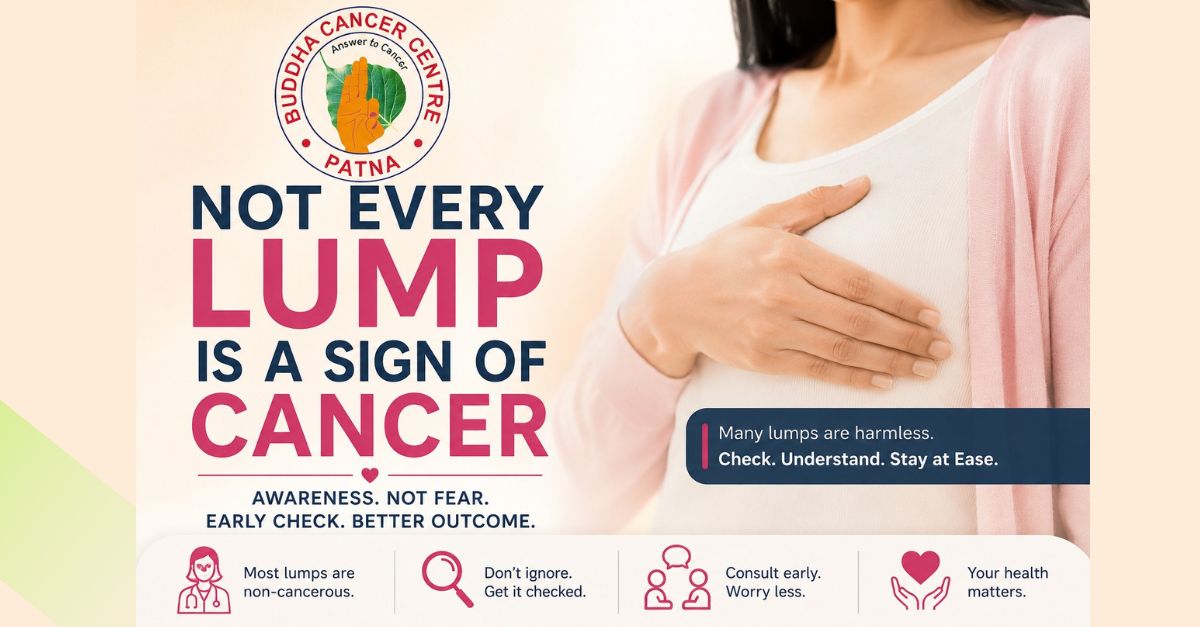
The moment someone notices a lump anywhere in the body, fear often arrives before facts.
The first thought is usually the same: “Is this cancer?”
It’s understandable. Cancer awareness has increased over the years, and people are more alert about unusual changes in their bodies. But here’s something equally important to know, not every lump is a sign of cancer.
In fact, many lumps are harmless and may happen due to infections, cysts, hormonal changes, swelling, or fatty tissue growth. Some disappear on their own. Others may need simple treatment. The key is not to ignore them, but also not to panic immediately.
Knowing the difference between “being aware” and “being afraid” can make all the difference.
Why Do Lumps Appear?
Our body changes constantly. Sometimes a lump develops because of something completely non-cancerous.
Common causes include:
Many people live with harmless lumps for years without serious health issues.
That said, it’s still important to get any new or unusual lump checked by a doctor. Not because every lump is dangerous, but because early evaluation brings peace of mind and timely treatment if needed.
When Should You Pay More Attention?
A lump may need medical evaluation if it:
Even then, these symptoms do not automatically mean cancer. They simply mean your body deserves proper attention.
The Problem with Fear and Internet Searches
One of the biggest mistakes people makes today is diagnosing themselves online. A small swelling becomes a source of sleepless nights after reading random articles or watching alarming videos. Fear grows faster than facts. But health decisions should never be based only on assumptions.
A doctor may recommend a physical examination, ultrasound, blood test, mammography, or biopsy depending on the situation. Many times, reports come back normal. And even if something serious is detected, early diagnosis improves treatment outcomes significantly.
Awareness Is Better Than Panic
Ignoring symptoms is risky. Overthinking every symptom is exhausting. The healthier approach lies somewhere in between. Be aware of your body and notice changes. Ask questions, seek medical advice when necessary. But don’t let fear take control before you know the truth. A lump is simply a signal that your body wants attention, not a final diagnosis.
The Importance of Early Consultation
Many people delay visiting a doctor because they are scared of hearing bad news. Ironically, this delay can sometimes create bigger problems later. Consulting a doctor early does not mean you are expecting cancer. It means you are taking care of yourself responsibly.
And sometimes, the biggest relief comes from hearing: “There is nothing serious.”
Health awareness is powerful when combined with correct information. So, if you or someone you know notices a lump, remember this clearly: not every lump is cancer.
Stay calm. Stay informed. Get evaluated when needed.
Fear helps no one, but timely action does. Your body speaks to you in different ways. Listening carefully — without panic — is one of the best forms of self-care.