Loading, please wait…
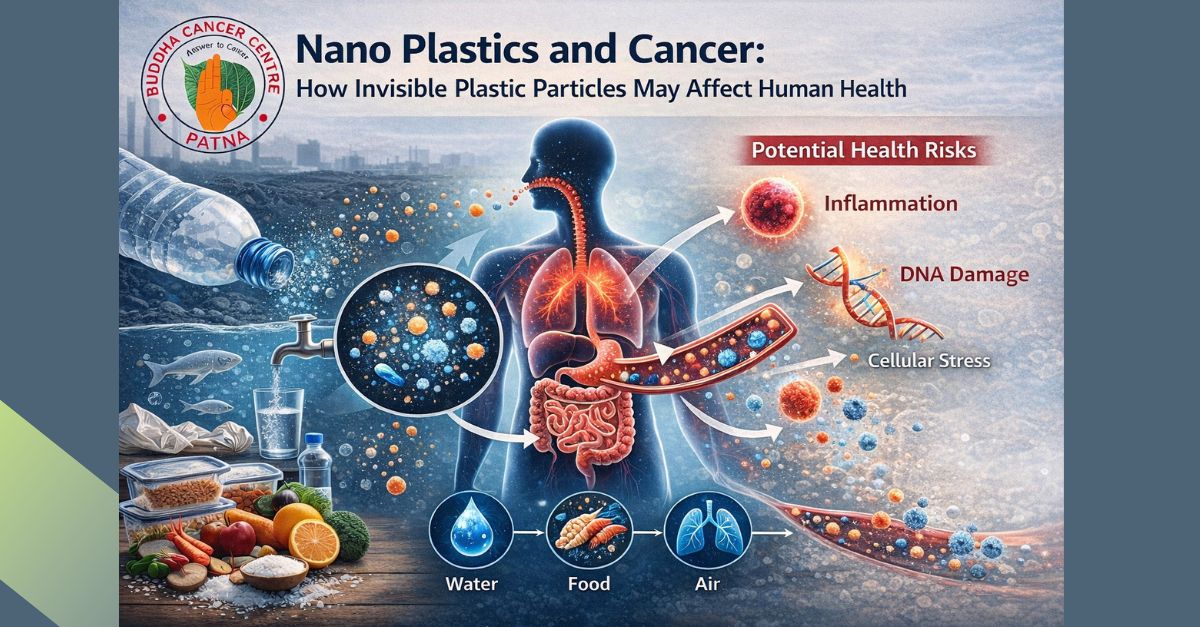
Plastic is everywhere; from the water bottles we drink and to the packaging that keeps our food fresh. For decades, plastic has made our lives easier. However, scientists are now discovering something concerning that plastics don’t simply disappear when they break down. They become smaller and smaller particles. Some of them are so tiny that we can’t even see them under a regular microscope. These are called nano plastics, which may be silently entering the human body.
Let’s understand what are nano plastics and why doctors and researchers around the world are paying attention to them.
What Are Nano Plastics?
Nano plastics are usually less than 1 micrometer (1000 nanometers). It is thousands times smaller than a sand’s grain. As they are so tiny, it can move easily through water, air, and even biological tissues.
The main ways nano plastics can enter our bodies:
Plastic containers, packaging, and environmental pollution can bring plastic particles into the food chain. When we consume contaminated food or water, nano plastics may enter our digestive system.
Very tiny plastic fibres are present in indoor air, especially from synthetic fabrics, carpets, and plastic materials. When we inhale them, they can reach the lungs.
Research in this area is still going on, but scientific studies suggest several mechanisms through which nano plastics might influence cancer development.
Studies have shown that nano plastics can disrupt the mitochondria (the powerhouses of cells). This creates oxidative stress, which can lead to "genotoxicity" which may cause cancer. When DNA is damaged and doesn't repair correctly, it can lead to the uncontrolled cell division which leads to cancer.
The body views these nano plastic particles as foreign invaders. Since the body cannot "digest" plastic so it accumulates in tissues and cause chronic inflammation. And this inflammation is a well-known precursor to DNA damage and tumour growth. Chronic inflammation is strongly associated with the development of cancers such as:
Plastics contain chemical additives like BPA or Phthalates. These chemicals are known endocrine disruptors that may interfere with hormones in the body, which potentially increasing the risk of hormone-sensitive cancers such as breast and prostate cancer.
Nano plastics can act like tiny sponges; they absorb toxic chemicals from the environment, like heavy metals and pesticides. Once they enter the body, they release these toxins into tissues, which may increase the risk of mutations.
As we know plastic production has increased intensely over the past 70 years. Today, the world produces more than 400 million tons of plastic every year. During the breakdown of plastic waste in the environment, the amount of microplastics and nano plastics continues to increase.
This means that exposure is likely to increase in the coming decades unless and until better waste management system and safer materials are adopted. So, for the healthcare professionals and cancer researchers, understanding this exposure is becoming increasingly imperative.
Completely avoiding plastics in modern life is difficult. But small steps can help to reduce exposure.
Here are some practical tips:
These changes may not eliminate exposure entirely, but they can help reduce it.
At healthcare institutions like Buddha Cancer Centre, we are also increasing awareness about environmental risk factors and it is just as important as cancer awareness and treatment.
Understanding how modern environmental exposures to pollutants, including nano plastics can affect human health. So, more research is needed to shape future prevention strategies. But one thing is clear that the story of plastics and human health is still unfolding and the smallest particles may turn out to have the biggest impact.
Nano plastics are extremely tiny plastic particles measuring less than 1 micrometer in size. They are formed when larger plastic materials break down over time.
Yes. Nano plastics can enter the body through food, drinking water and air inhalation.
Research is still ongoing. However, early studies suggest nano plastics may cause inflammation, oxidative stress, and DNA damage, all of which are associated with cancer development.
Scientists have detected plastic particles in human blood, lung tissue, placenta, and digestive organs in some studies.
Reducing single-use plastics, avoiding heating food in plastic containers, using glass or steel utensils, and choosing natural materials instead of synthetic can help reduce exposure.
Yes, this is a relatively new area of study, and scientists around the world are continuing to investigate how nano plastics affect human health.
Studies have detected plastic particles in several common foods, such as seafood, bottled water, salt, fruits, and vegetables. These particles often come from environmental contamination or plastic packaging.
At Buddha Cancer Centre, our goal is not only to provide advanced cancer treatment but also to promote awareness about emerging environmental risk factors that may impact long-term health.
Nano plastics are extremely tiny plastic particles measuring less than 1 micrometer in size. They are formed when larger plastic materials break down over time.
Yes. Nano plastics can enter the body through food, drinking water and air inhalation.
Research is still ongoing. However, early studies suggest nano plastics may cause inflammation, oxidative stress, and DNA damage, all of which are associated with cancer development.
Scientists have detected plastic particles in human blood, lung tissue, placenta, and digestive organs in some studies.
Reducing single-use plastics, avoiding heating food in plastic containers, using glass or steel utensils, and choosing natural materials instead of synthetic can help reduce exposure.
Yes, this is a relatively new area of study, and scientists around the world are continuing to investigate how nano plastics affect human health.
Studies have detected plastic particles in several common foods, such as seafood, bottled water, salt, fruits, and vegetables. These particles often come from environmental contamination or plastic packaging.